

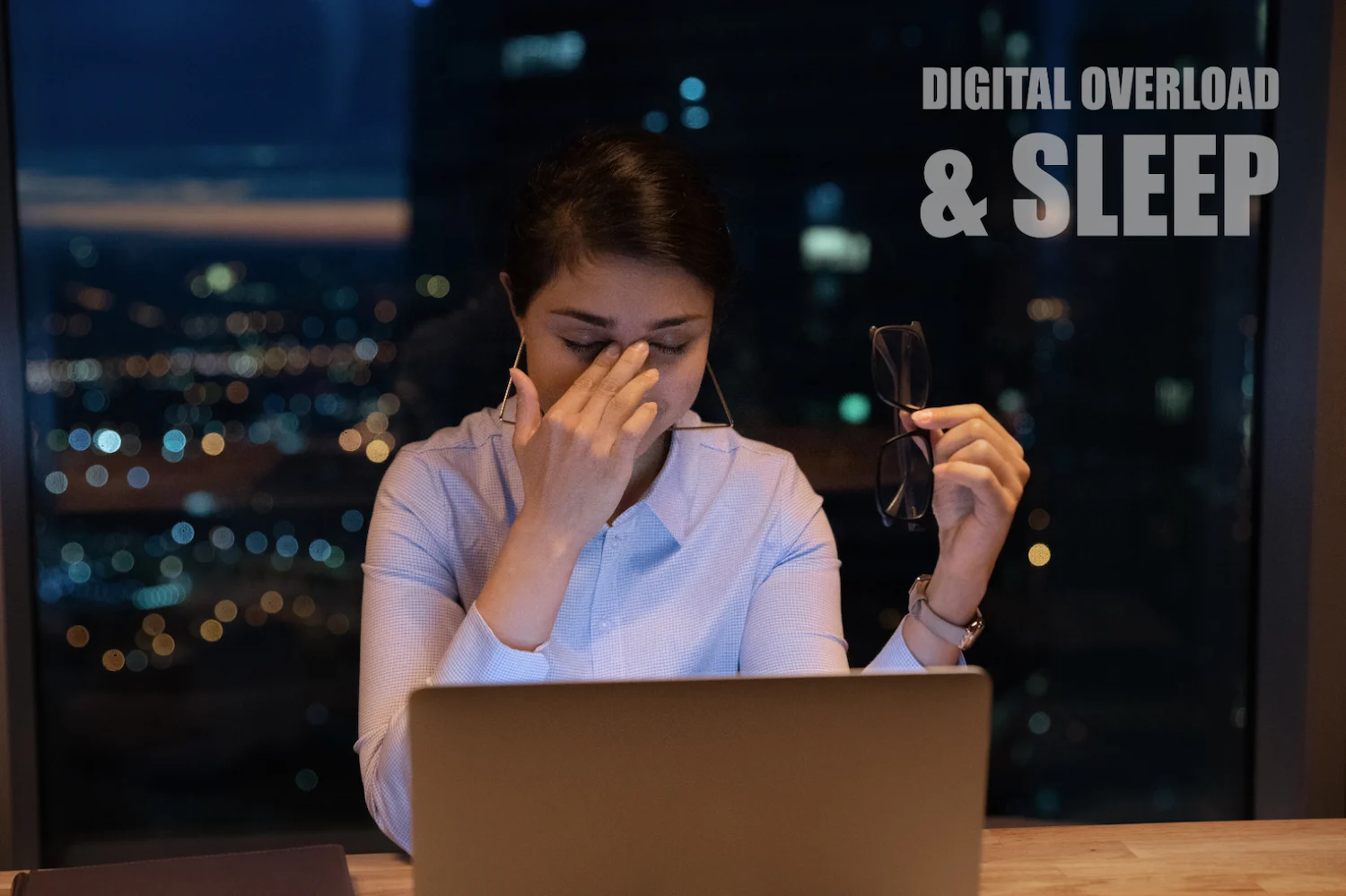
05 May How Information Overload Ruins Our Sleep — and How to Protect Ourselves
At Gevorest, through our “Sleep Education (Ypnopaideia)” series, we often emphasize that sleep is not a passive break from the day, but an active and vital recovery process for both body and mind. Today, however, a new, invisible “enemy” is creeping into our bedrooms: digital information overload.
How many times have you found yourself mindlessly scrolling on your phone (doomscrolling), reading distressing news or consuming endless content just before closing your eyes? This habit doesn’t just steal time; it fundamentally alters our brain chemistry.
What do the latest data show?
According to recent studies (2025-2026), such as those by the American Academy of Sleep Medicine (AASM), 38% of adults report that doomscrolling before bed significantly degrades their quality of rest. For younger generations (ages 18-24), this figure skyrockets to 46%, signalling a genuine digital sleep crisis.
Digital Overload and the Nervous System
The human nervous system is not designed to process the sheer volume and speed of information we receive daily. When we expose ourselves to digital overload before bed, we trigger a series of negative reactions:
Cognitive Stimulation & Hyperarousal
Rapid-fire and often negative information activates the brain’s “fear center” (the amygdala). This spikes cortisol levels, keeping us in a “fight or flight” state and making it impossible to transition into deep sleep stages.
The “Brain Rot” Phenomenon
The overconsumption of fragmented information leads to the erosion of attention and memory. This “digital fatigue” paradoxically makes it even harder for us to put the phone down.
The Blue Light Trap
Beyond the content itself, the blue light emitted by screens suppresses melatonin, the hormone that signals our body it is time to rest.
The Vicious Cycle of Self-Control
Sleep deprivation weakens the prefrontal cortex, the part of the brain responsible for impulse control. Thus, the less we sleep, the less willpower we have to stop scrolling the following night.
Decompression Techniques: How to “Clear” Your Mind
Preparing for a good night’s sleep begins long before we lie down. To protect your “sleep sanctuary,” science and Ypnopaideia suggest:
Establish a “Digital Sunset”
At least 30-60 minutes before bed, put away all screens. This gives your brain time to regulate its temperature and begin the secretion of melatonin.
Grayscale Mode
Switch your screen to grayscale in the evening. Without vivid colors, apps become less stimulating, and the brain receives fewer dopamine hits.
Replace, Don’t Just Remove
Instead of scrolling, opt for “passive” activities (lean-back apps) such as listening to a podcast, relaxing music, or reading a physical book.
The “Brain Dump” Technique
If the news of the day has caused you anxiety, write your thoughts down on paper. This act “transfers” the burden from your nervous system to the page, emptying your mind.
Focus on Breathing
Breathing exercises help the parasympathetic nervous system take the lead, relaxing your muscles and the tension of the day.
Create a “Sanctuary”
The bedroom should be a tech-free zone. Ensure the environment is cool, dark, and quiet, and invest in a sleep system that properly supports your body. Browse our full range of Gevorest sleep products to find the right fit for you.
Conclusion
In the world of Gevorest, sleep is sacred. The world will never stop producing information, but you can choose when to stop consuming it. Choose to “disconnect” from the digital noise to “reconnect” with yourself. Protect your sleep, because a rested brain is the best tool for managing a demanding reality.
Frequently Asked Questions
Does screen time before bed affect sleep quality?
Yes, in multiple ways. Screen content activates the amygdala and raises cortisol, while blue light from displays suppresses melatonin secretion. Both effects delay sleep onset and reduce deep sleep duration. A Digital Sunset of 30–60 minutes before bed is the most effective countermeasure.
What is doomscrolling and why is it bad for sleep?
Doomscrolling refers to the compulsive habit of consuming large volumes of often negative news or social media content. It keeps the brain in a state of high alert, spikes stress hormones, and exploits the same reward circuits that make the behaviour self-reinforcing — making it difficult to stop even when tired.
How does blue light from phones affect melatonin?
Blue light wavelengths detected by the retina signal the brain’s circadian clock that it is still daytime. When present in the evening, this delays or suppresses melatonin release, pushing back the body’s biological readiness for sleep.
What is the Digital Sunset technique?
A Digital Sunset is a deliberate cut-off time — typically 30 to 60 minutes before sleep — after which you stop using all screen-based devices. By removing the stimulation of both content and blue light, you allow the brain’s natural wind-down process and melatonin secretion to begin on schedule.
Can information overload cause insomnia?
Chronic digital overload can contribute to sleep onset insomnia and poor sleep maintenance through sustained cortisol elevation, cognitive hyperarousal, and the gradual weakening of the prefrontal cortex’s impulse-control function. Addressing pre-sleep digital habits is often the first practical step to improving sleep.
What is the brain dump technique for better sleep?
A brain dump involves writing down all unresolved thoughts, worries, or tasks on paper before going to bed. By externalising this mental load, you reduce the cognitive pressure that drives rumination during the night, making it easier to fall asleep.
Gevorest is dedicated to the science and practice of restorative sleep. Our Ypnopaideia series brings together sleep research, product philosophy, and practical guidance to help you sleep better – every night. Contact the Gevorest team or visit your nearest Sleep Centre for personalised advice.